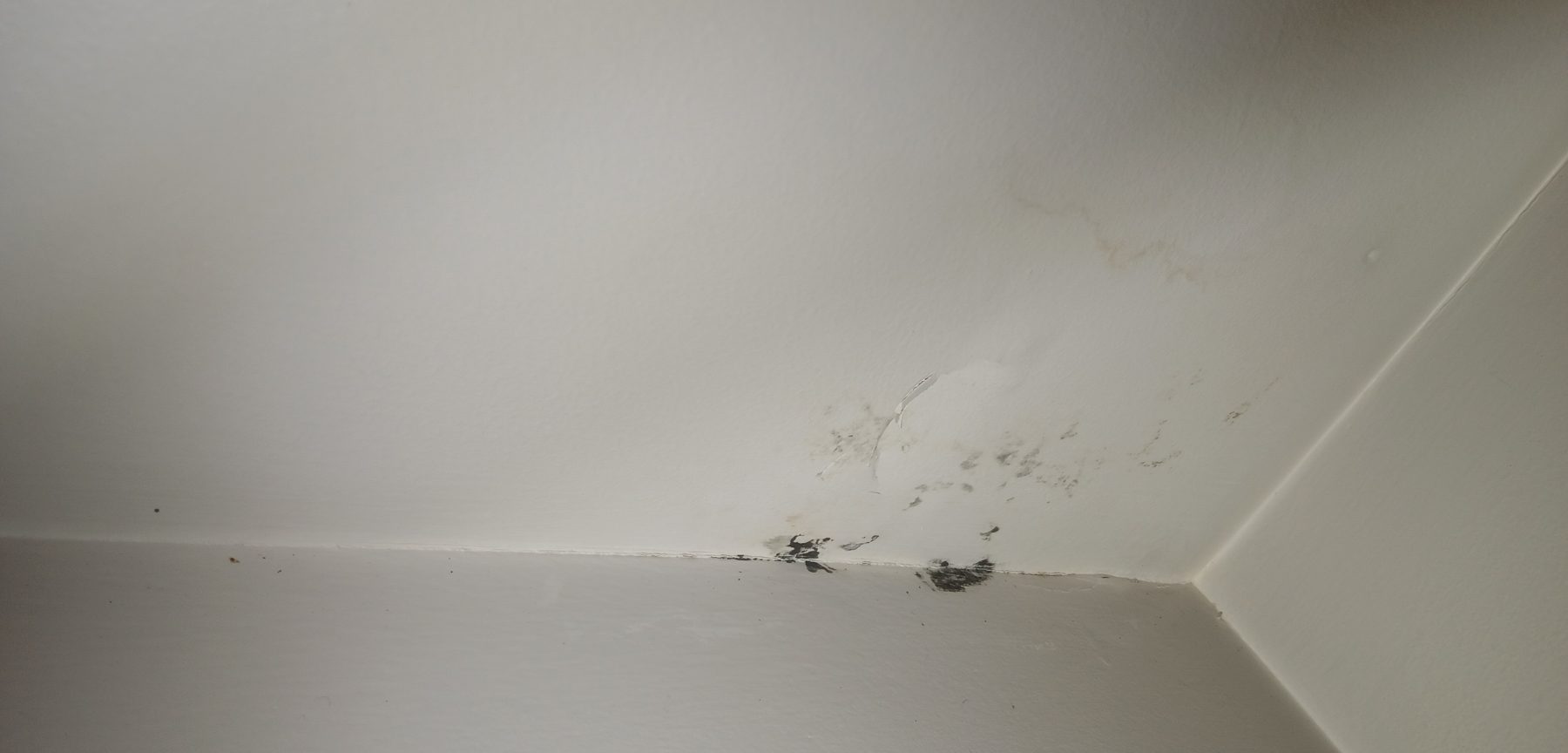
Mold in Maryland Rentals: A Five-Part Series, Part II of V. By Christopher L. Beard, Attorney at Law, Annapolis, Maryland.
Baltimore City's rowhouses and older apartment buildings hold water in familiar places: roofs, basements, window frames, and aging plumbing. When a leak goes unrepaired, mold follows. This Part examines the City's Property Maintenance Code and rental licensing law, its local rent escrow statute, the Maryland Tenant Mold Protection Act, and the public health literature on damp buildings.
The World Health Organization reviewed the research on damp indoor environments in its 2009 Guidelines for Indoor Air Quality: Dampness and Mould. It concluded that the most important health effects are increased respiratory symptoms, allergies, and asthma, together with disturbance of the immune system. It identified the prevention of persistent dampness and microbial growth inside buildings as the most important means of avoiding those effects.1
The National Institute of Environmental Health Sciences, part of the National Institutes of Health, reports that damp, moldy buildings increase occupants' risk of respiratory problems, including shortness of breath and worsening asthma.2 The United States Environmental Protection Agency (EPA) states that the key to mold control is moisture control. It advises that occupants and owners dry water-damaged areas within 24 to 48 hours to prevent mold growth.3
The General Assembly enacted the Maryland Tenant Mold Protection Act in 2025, and its landlord duties took effect on July 1, 2025, in Baltimore City.4 Once a landlord receives written notice of mold from a tenant or from the local agency that enforces housing and livability codes, the landlord must perform a mold assessment within 15 days. If the assessment finds mold, the landlord must complete remediation within 45 days, or within a reasonable time if 45 days is not feasible.
The statute also obliges the landlord to follow recommended industry guidelines and state and local law, to communicate with occupants during the work, to ensure proper ventilation and low indoor humidity, and to maintain the property under all applicable housing and building codes.4 The leading industry standard for remediation is the ANSI/IICRC S520 Standard for Professional Mold Remediation.5 The landlord must give each tenant a mold pamphlet when the lease begins, and the State may use the EPA's Brief Guide as that pamphlet.6
The Environment Article defines mold to include Alternaria, Aspergillus, Cladosporium, Fusarium, Memnoniella, Mucor, Penicillium, Stachybotrys chartarum, and Trichoderma.6 The Act further directs the Maryland Department of the Environment to adopt uniform assessment and remediation standards by June 1, 2027, measured against the EPA's Mold Remediation in Schools and Commercial Buildings.7
The Department of Housing and Community Development administers and enforces the Baltimore City Property Maintenance Code.8 The City Health Department directs a tenant who suspects mold to file a complaint through 311, so that housing inspectors can investigate the moisture intrusion behind it, such as a leaking roof or pipe.9 Article 13, § 5-28 requires the Department to report each year on the notices it issues for licensed rental dwellings, including notices for the appearance of mold.10
A Baltimore City rental dwelling must hold a rental license, and Article 13, § 5-7 governs the inspection that precedes a new or renewed license, including a third-party home inspection.11 A City notice that identifies mold counts as written notice from the local code agency under Real Property Article § 8-220. That notice starts the landlord's 15-day clock for a mold assessment.
Baltimore City requires every non-owner-occupied rental property to be registered and licensed. To obtain a license, the owner must submit a passing report from a State-licensed home inspector registered with the City, or a passing Section 8 inspection report, for each unit.15 The landlord chooses and pays that inspector. A new inspection report must accompany each license renewal.
A passing license inspection does not establish that a unit is free of mold. A Baltimore tenant advocacy organization has observed that the City's rental license checklist asks no question about the appearance or the smell of mold.16 A unit can therefore pass while mold grows behind a wall or inside the air handler. A tenant's own photographs and an independent assessment make the better record.
The City Code requires the Housing Commissioner to make public the license status of any rental dwelling. It also requires public access to the violation notices, orders, and citations that the Department has issued for the dwelling.17 A tenant can search those records before signing a lease and again when a moisture problem appears. Prior notices for leaks or mold at the same address can show what the landlord knew.
Unless an exemption applies, a landlord without a valid rental license may not collect rent for the dwelling. To win a failure to pay rent case in the District Court, the landlord must show that the property held a valid license.17 A tenant facing a rent claim should therefore check the license record. A lapse in licensing often travels with the same neglect that produces mold.
Tenants of the Housing Authority of Baltimore City face an earlier deadline than other renters. The Local Government Tort Claims Act includes housing authorities within its definition of local government and requires written notice of an injury claim within one year.14 A public housing tenant should give that notice promptly, without waiting for remediation to finish or for a rent escrow case to end.
Baltimore City has its own rent escrow law in Subtitle 9-9 of the Code of Public Local Laws, and City tenants pursue rent escrow under that subtitle.12 Rent escrow can compel repairs, but it does not compensate a tenant for illness, medical expenses, lost wages, or ruined belongings. A claim for those losses proceeds separately, as a negligence action in the circuit court.
A tenant should read any agreement in a rent escrow or eviction case with care before signing it. A broadly worded release signed in the District Court can extinguish the injury claim. Any agreement in that forum should therefore leave the injury claim expressly outside its terms.
A tenant should report the mold and the underlying water problem to the landlord in writing and keep a dated copy. The tenant should also file a complaint through 311 so that the Department of Housing and Community Development inspects the water problem, and keep the inspection report and any violation notice. Before anyone repaints or removes materials, the tenant should photograph the growth, the staining, and damaged belongings.
A tenant should retain an independent, qualified mold assessor rather than rely on the landlord's contractor, and should save every message, work order, and repair ticket. If new symptoms begin after exposure to mold or water-damaged building materials, including exposure the tenant did not recognize at the time, the tenant should see a physician for care.
Maryland injury claims generally must be filed within three years after the claim arises.13 Claims against a housing authority carry an earlier requirement, because the Local Government Tort Claims Act requires written notice within one year after the injury.14 A tenant who waits for remediation to finish before consulting counsel can lose rights in the meantime.

Christopher L. Beard, an Annapolis attorney, concentrates his practice in toxic mold injury and habitability claims and represents tenants in Baltimore City. To discuss a mold problem, e-mail chris@attorneybeard.com or call (410) 267-0227. Readers may also consult the companion article on the Maryland Tenant Mold Protection Act.
This paper is Part II of the five-part series. The full series, Mold in Maryland Rentals, collects every jurisdiction in one place. The companion Parts address Anne Arundel County, Baltimore County, Prince George's County, and the Eastern Shore.
Readers may also return to the attorneybeard.com home page or learn how Chris Beard represents Maryland tenants injured by mold.


