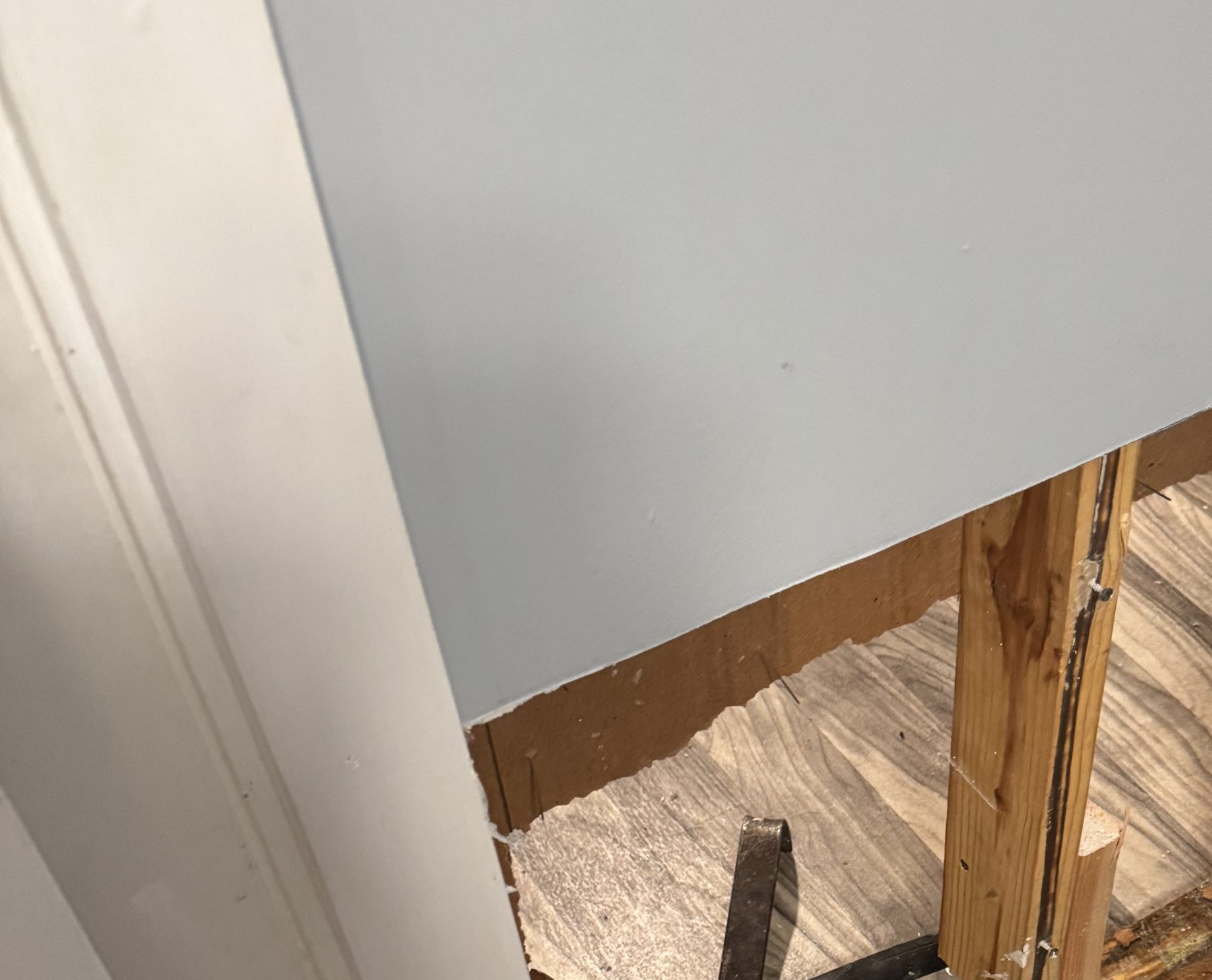
A common response to a mold complaint is that the mold sits inside a wall, sealed away from the people in the home. Building science speakers at the October 2026 Safe Housing Collaborative conference explained why that reassurance often fails. Every house leaks air, and ordinary household appliances move air through the same hidden spaces where mold grows.
Clothes dryers, kitchen range hoods, bathroom fans, and unbalanced heating and air conditioning returns all push air out of a house. Replacement air must come from somewhere. It often enters through electrical outlets, switch plates, gaps along baseboards, recessed lights, and plumbing openings, many of which connect directly to wall cavities. When a house runs at negative pressure, it can draw air across hidden growth and into the living space every day.
A home that sucks pulls its replacement air through cracks and openings in the walls, carrying spores from hidden mold into the rooms where a family sleeps and eats. A home that blows keeps that air moving out of the living space instead of in. The difference often comes down to how the heating and air conditioning system is balanced and how the home brings in fresh air.
That airflow often leaves marks. Dark lines in carpet along baseboards and dust shadows around outlets form where air has been pulled through gaps, a pattern called filtration soiling. Technicians can measure house pressure with a digital manometer and test leakage with a blower door. Paired with an infrared camera under the testing method known as ASTM E1186, a blower door can reveal leakage paths and cold spots where condensation forms.
That same airflow explains why testing conditions matter. An assessor who samples a vacant, closed-up home with the heating and air conditioning off measures still air in which spores have settled. A family living there runs the dryer, the fans, and the system every day, opens and closes doors, and walks across the floors, and all of that pulls air through hidden cavities and stirs settled spores back into the air.
A thorough assessor samples with the heating and air conditioning running as well as off, so the results come closer to the air the family actually breathes. A single clean result from a quiet, empty house says little about that exposure. Testing is like fishing: one cast in one spot that comes back empty does not prove the lake has no fish. You can read more in our article on why a clean air test does not always mean a safe home.
The old saying that a house must breathe misleads people. Building scientists say instead to build tight and ventilate right. Occupants need fresh air, but it should arrive through controlled mechanical ventilation, such as systems designed under the American Society of Heating, Refrigerating and Air-Conditioning Engineers (ASHRAE) Standard 62.2, rather than through dirty wall cavities. Wall assemblies must still allow moisture to dry instead of trapping it behind barriers or spray foam.
If you notice dark lines along baseboards, musty odors near outlets, or symptoms that worsen when the dryer or exhaust fans run, write those observations down and photograph them. Share them with any assessor who inspects the home, since they can point toward hidden sources. To discuss a Maryland mold injury claim, e-mail chris@attorneybeard.com or call (410) 267-0227.


